Setting a Table for Guests with Different Arrival Times
Setting a table for guests with different arrival times keeps early arrivals comfortable and later places ready, without making anyone feel rushed.
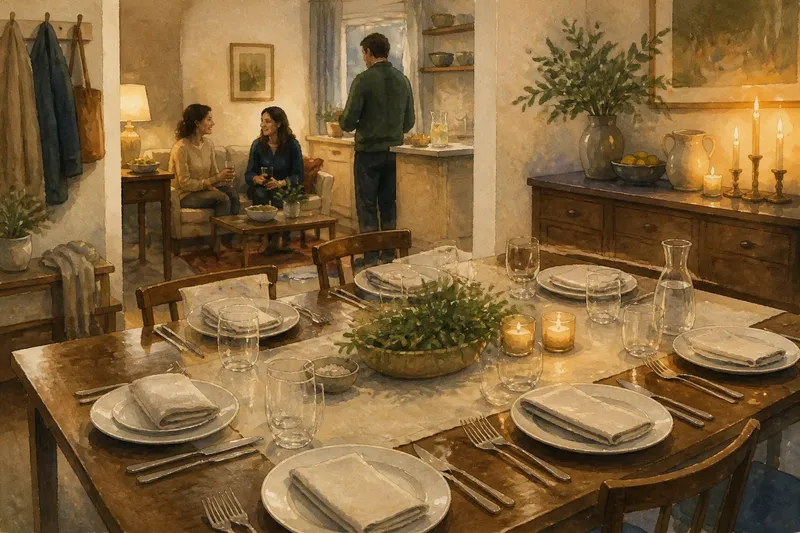
Setting a table for guests with different arrival times works best when the meal has a comfortable place to begin before everyone sits down. A clear landing spot for coats, a drink within reach, and a table that stays ready let early guests settle in without turning the evening into a waiting room.
The useful distinction is between what guests can use now and what should remain untouched for the meal. These choices help you host at an easy pace, whether a friend arrives early to lend a hand or a relative is coming straight from work.
1. Decide what the first arrivals can do
Choose a simple opening activity before setting out the plates. Guests might have sparkling water and olives at the kitchen counter, or sit in the living room with tea while you finish cooking. Keeping this first stop separate from the dining table protects the meal’s place settings and gives people somewhere to land.
Make the invitation specific. “Come in and put your coat on the bed; there are drinks on the sideboard” is more useful than leaving guests to guess where they belong. If someone arrives while you are busy, a clear route to a glass and a comfortable seat takes pressure off both of you.
Keep the first offering modest: a bowl of nuts, sliced fruit, or bread that does not need a last-minute garnish. The point is to welcome people, not serve a second meal before the main one.
2. Keep the dining table visibly ready
Set the places for everyone who is expected, including those who will come later. A plate, cutlery, napkin, and glass make the table read as a shared destination rather than an improvised afterthought. Leave each place aligned and avoid using a future guest’s plate as a temporary surface for serving spoons or mail.
For a small table, keep the center low and narrow. A short vase, a shallow bowl, or a few candles leaves room for serving dishes and makes it easier for guests to see one another. Put condiments and water in spots that do not block a place setting.
If you need the table for prep, clear it before the first guest arrives. A folded kitchen towel can protect a surface while you work, but the completed setting should be visible when people enter.
3. Give early guests a useful place to gather
Choose a spot that does not require you to host continuously. A sideboard or kitchen island can hold glasses, a pitcher, and a small snack; a nearby chair gives someone a place to sit. Keep the route to the bathroom and coat storage easy to spot, especially if guests do not know your home well.
Think through what an early guest might naturally offer to do. If you would welcome help, point to one clear task, such as carrying a bowl of lemons to the counter. If you would rather finish alone, say so warmly and direct them to a drink and a place to sit. Vague offers to “help with anything” can leave both host and guest unsure.
Imagine two friends arriving while the soup is still warming and another guest is delayed by a train connection. You set out water and crackers in the living room, tell the first pair that the table is for dinner, and leave the extra place untouched. The early guests can talk without hovering over the food, and the late guest can join a table that still feels prepared for them.
4. Choose food that can wait without fuss
Match the menu to the shape of the gathering. A stew, baked pasta, or room-temperature tart can tolerate a flexible arrival better than a meal that depends on several dishes hitting the table at once. This does not mean every course must sit out; keep hot food covered or chilled food stored appropriately until serving.
Serve an easy snack separately from the dinner components. A bowl of almonds or sliced apples can welcome early arrivals without making the planned meal feel partly eaten. Avoid laying out delicate garnishes or dressed greens well ahead if they will lose their texture.
Keep the serving plan simple: decide what can be placed on the table in advance and what belongs in the kitchen until everyone is ready. Follow the food label and manufacturer instructions for storage and handling.
5. Make the later arrival easy to join
Tell guests the expected rhythm rather than an exact minute. A note such as “Drinks from six, dinner when everyone is here” gives people a useful sense of the evening without making anyone feel that a late train has spoiled the plan. If the meal needs a firm start, say that clearly when you invite them.
When someone arrives after others have sat down, welcome them before adjusting the meal. Keep a spare napkin and serving utensil nearby, and leave a little space for a coat or bag. A brief greeting and a natural place at the table are kinder than a detailed recap of what they missed.
Where practical, hold back one portion of a dish in the kitchen rather than setting it out early. That small reserve makes it easier to serve a late guest without scraping together the last spoonful from the table.
6. Use a gentle cue to bring everyone to dinner
Choose a cue that fits your home: a simple invitation, a candle being lit, or a serving dish carried to the table. A consistent signal helps the gathering change gears without an announcement that sounds like a summons. Make it clear enough that a guest in another room notices.
Let the cue come after you have checked that the food and places are ready. If one person is delayed, decide whether the group can comfortably begin without them; that depends on the occasion and the guest’s circumstances. For a casual meal, you might serve the first course and welcome the latecomer into the next one. For a more formal dinner, you may prefer to wait briefly, while keeping everyone comfortable.
Use a calm, direct phrase: “Dinner is ready; come join us when you’re comfortable.” Guests can respond without guessing whether the table is open or whether they should keep waiting.
7. What should stay out and what can wait?
Should every place be set before the first guest arrives?
Usually, yes, if the table has room and the settings will not be disturbed. A complete table shows late arrivals that a place is waiting for them, while a separate gathering spot gives early guests somewhere else to settle.
What can I put out for guests who arrive early?
Offer something easy to serve and easy to pause, such as water, tea, olives, or crackers. Keep the main dishes and fragile garnishes aside until dinner is ready.
How do I handle a guest who is running late?
Let the guest know the meal’s general timing and make a simple plan for their place. Depending on the occasion, you can wait a little, begin with a course that holds well, or save a portion to serve when they arrive.
Where should early guests sit?
Choose a comfortable spot that does not occupy the dining table or block the kitchen work area. A living-room chair, kitchen stool, or cleared counter can work if guests can reach a drink and know where to put a coat.
8. Keep the host’s attention available
A table can look ready while the host remains free to greet people. Put out the napkins, glasses, and serving pieces beforehand, then keep only the final food tasks for the last stretch. If a dish needs active attention, ask a trusted guest to welcome arrivals or keep the first drinks available.
Say you are hosting at home and the roasted vegetables need a final turn while guests begin to arrive. You could put the prepared salad in the refrigerator, leave the table set, and ask one friend to show newcomers where coats go. The likely result is a calmer entrance and a host who can finish the food without abandoning the door.
Setting a table for guests with different arrival times is less about precise timing than making the next small action obvious. Give early arrivals a place to land, protect the seats meant for dinner, and let a late guest step into a gathering that has room for them.