Keepsake Box or Open Shelf: Two Ways to Keep a Memento
A keepsake box or open shelf changes how a memento meets daily life. Choose the setting that suits its meaning, your room, and how often you want to see it.
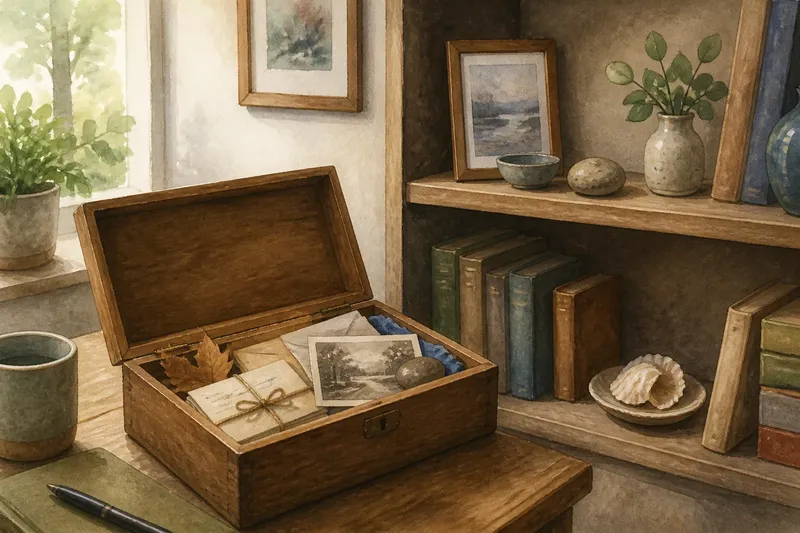
A keepsake box or open shelf changes a memento from something encountered by chance into something either deliberately revisited or quietly present. A ticket stub tucked into a wooden box asks you to open it; a small stone on a bookcase catches your eye while you reach for a novel. Neither choice makes the object more meaningful. Each gives its meaning a different place in the room and in your routine.
The useful question is not simply which option looks better. Consider how often you want to see the memento, whether handling it is part of its appeal, and how it fits among the room’s everyday objects. Access and visibility are the heart of the decision: one arrangement invites a visit, while the other lets the object share the day with you.
How does a keepsake box or open shelf change a memento’s role?
A box makes keeping an act of choice. You decide when to lift the lid, search, and take an object out, so the memento tends to belong to a particular moment of attention. It may be part of a private collection, a memory you return to during a quiet evening, or a handful of small things that make more sense together than apart.
An open shelf gives the memento a continuing role in the room. You see it during ordinary routines, and its presence can become a gentle reminder without requiring a separate occasion. A postcard beside the desk may prompt a thought while you work; a smooth shell on a hallway shelf may simply feel familiar as you pass.
That difference can affect what you keep nearby. The box can hold objects that are small, fragile, or difficult to arrange attractively. The shelf works best for an item that can stand on its own, remain easy to see, and coexist with the room’s use rather than interrupt it.
How often do you want to encounter the memento?
Choose a shelf when you want the object to be part of the room’s visual rhythm. It can sit beside books, a framed photograph, or a ceramic dish, where you notice it in passing. A visible memento does not need to demand attention; a quiet position at the edge of a bookcase can be enough.
Choose a box when the value lies partly in the act of returning to the object. Opening an envelope of old notes, for instance, creates a pause that a glance from across the room does not. The container can also make a loose group feel intentional: a few paper keepsakes, a ribbon, and a small object from a shared trip can stay together rather than being scattered around the house.
Imagine you have a pressed leaf from a walk with a friend and a small stone from the same afternoon. If you want a daily reminder, you might place the stone on a shelf and keep the leaf flat in a box or archival sleeve. If the pair feels like one private memory, you might store both together and open the box when you want to revisit the walk.
Try noticing whether you naturally pause near the object’s proposed spot. A memento on a shelf you rarely pass may be visible in theory but absent from your daily attention.
Will the object work better on display or in storage?
Display favors objects with a stable shape and a clear place to rest. A small ceramic piece, a smooth pebble, or a framed note can often sit without extra support. Thin paper, a delicate flower, or a loose fabric keepsake may be easier to protect in a box, where light, dust, and casual handling are less immediate concerns.
Look at the object itself before choosing the container. Does it lie flat, stand securely, or need a backing? Would it be hard to retrieve if placed behind other items? An open shelf has practical limits: an object that tips easily or gets in the way of books and household tasks may become a nuisance rather than a welcome presence.
A box also has limits. If the memento is buried beneath unrelated belongings, you may stop looking for it. A small tray or divider can keep related pieces easy to find, while a clear label on the outside can help identify a collection without turning the container into a display.
For delicate or valuable items, use appropriate storage materials and follow the object’s care guidance. If the right approach depends on a maker’s instructions or local rules, check those before choosing where or how to keep it.
How can a memento fit without making a room feel crowded?
A shelf gives the object a visible footprint, even when the object itself is small. Leave enough breathing room around it to distinguish it from the things it sits beside. A single memento can feel deliberate on a bookcase; several unrelated objects crowded into the same patch may blur together and become visual clutter.
Group objects by a connection that matters to you, not just by size or color. A small photograph and a handmade token from the same person may belong together, while two objects with similar shapes may not. If a group looks busy, move one piece elsewhere or place the more private items in a box.
A keepsake box takes up space too, but it can be stored on a desk, tucked into a cabinet, or placed where you naturally sit. Think about whether you will remember its location and be able to open it comfortably. A beautiful box on a high, inaccessible shelf may be less useful than a plain one within reach.
Say you want to keep a note from a relative but do not want it visible on the living-room bookcase. You could fold it into a small envelope, write a discreet description on the envelope, and keep it in a box near your reading chair. The expected result is a private keepsake that remains findable when you choose to revisit it, without becoming part of the room’s everyday display.
What do readers ask before choosing a keepsake box or open shelf?
Should a sentimental object be displayed?
Display it if seeing it in ordinary moments feels welcome and the room has a suitable spot. Keeping it out of sight is equally meaningful when privacy, fragility, or the pleasure of opening a collection matters more.
Can one memento be split between a box and a shelf?
Yes, if the object naturally has parts or a related item can stand in for it. You might display a sturdy token and keep its delicate paper companion protected nearby, so the pair remains connected without treating both pieces the same way.
What belongs in a keepsake box?
Small items that are meaningful, easy to store together, and worth revisiting are natural candidates. Notes, photographs, fabric pieces, and other personal objects can be grouped by person, occasion, or shared association rather than mixed into a general drawer.
How can I make an open-shelf memento feel intentional?
Give it a stable position with some clear space around it, and place it where you will notice it without having to move other things. A simple bookend, shallow dish, or small frame can help the object sit securely and read as part of the room.
Can you change the arrangement later?
Absolutely. A memento’s role can change as a room changes or as you want a different kind of relationship with it. Something that once felt comforting in view may later feel more personal in a box; an object you rarely opened may become a useful everyday reminder on a shelf.
Make the change by noticing what the current arrangement asks of you. If you keep moving an item to make room, its display spot may not suit the room. If you think about a boxed object but cannot remember where it is, give it a more accessible container or move it somewhere you naturally pause.
There is no need to make the choice permanent. You can rotate a few shelf objects, return some to storage, or bring one small item out when it feels timely. The aim is not to show every memory or to hide every private one; it is to give each object a place that matches the kind of attention you want to offer it.
When choosing between a keepsake box or open shelf, consider the moment you want the object to create: a deliberate pause when you open a lid, or a familiar glance woven into the room. That small distinction is often enough to settle the question—and to make the memento feel at home.