Why a Repeated Gesture Can Mark a Moment
Why a repeated gesture can mark a moment: use a small, familiar action to give the shift between work, rest, and other parts of the day a clear edge.
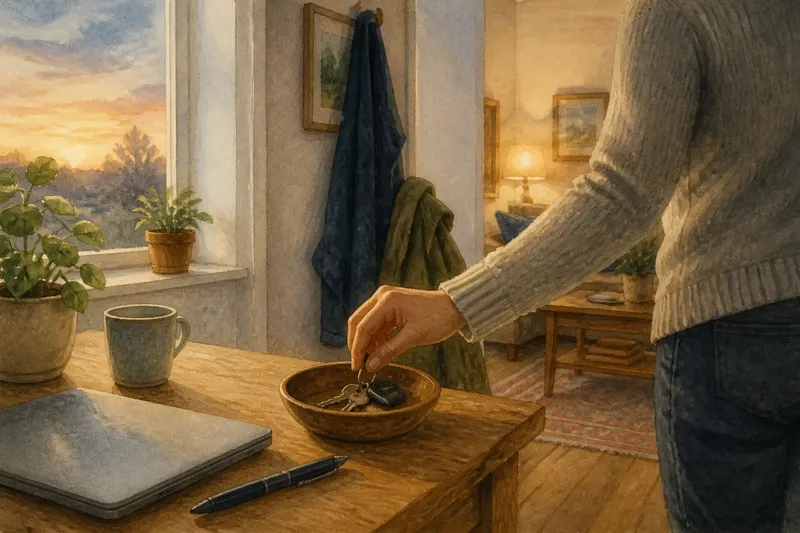
Why a repeated gesture can mark a moment is easiest to see at a doorway: you set your keys in the same bowl, take off your coat, and the workday begins to loosen its hold. The action does not change the clock or solve the tasks waiting inside. It gives the shift from one part of the day to another a recognizable place.
That is the quiet usefulness of a ritual. A gesture repeated at a transition can act like a threshold: not a wall between activities, but a small, visible point where attention turns. It can help a person notice that one thing has ended and another is beginning.
A repeated gesture gives an ordinary transition an edge
Days are full of transitions that rarely arrive with a clean pause. A meeting ends while messages keep coming; a meal finishes, but the kitchen still needs attention; a child’s bedtime routine begins while an adult is thinking about tomorrow. When the next activity starts immediately, the mind may continue carrying the previous one along.
A familiar gesture can make the boundary easier to notice. Closing a notebook, washing a mug, changing into house shoes, or opening a window can become a cue that the scene has shifted. The movement is modest, but its repeated placement gives it meaning: this is the point where I stop doing one thing and turn toward another.
The gesture need not be solemn or symbolic. In fact, ordinary actions often work well because they already fit the setting. A person who tends to finish work at a desk might close the laptop and put a pen back in its cup. Someone ending a walk might hang a leash by the door before moving on with the evening.
Choose an action that belongs naturally at the boundary you want to mark.
Why repetition makes the cue recognizable
A one-off action can feel pleasant, but it has no established place in the day. Repetition lets the same movement become familiar in a particular context. Over time, closing the notebook after work may call up the next part of the routine more readily than an unfamiliar gesture would.
The useful pattern is not simply doing something often. It is doing a recognizable action near the same kind of transition. Lighting a lamp whenever evening reading begins can mark a move into quieter time; it does not need to happen at exactly the same clock time or under identical conditions.
Consistency makes the cue legible, while flexibility keeps it usable. If the usual mug is in the dishwasher, rinsing a glass can serve the same purpose. The point is not to preserve a perfect performance; it is to recognize the shift and give it a small, repeatable form.
Let the action be steady enough to recognize and loose enough to adapt.
How to choose a gesture that fits the threshold
Start by noticing a transition that tends to blur. You might find that work spills into dinner, that errands run together, or that getting home does not feel like arriving. Then look for an action already available at that point, rather than adding an elaborate routine that requires special equipment or extra time.
- Name the boundary. Decide which shift you want to notice, such as leaving work, beginning a meal, or returning home.
- Pick a small physical action. Close a notebook, place shoes by the mat, or draw a curtain; choose something comfortable and easy to repeat.
- Attach it to the transition. Do it at the point where one activity is ending or the next is beginning, not at a disconnected time.
- Keep its meaning simple. Let the gesture signal a change of attention rather than demand a particular mood.
- Adjust when life changes. If the action becomes awkward in a different room or schedule, choose a nearby substitute that still marks the same shift.
Say you often carry unfinished work thoughts into dinner. You could choose to close your notebook after the last work task and place it on a particular shelf; the expected observable result is a clear, visible cue that the work materials are put away before you set out dinner. The gesture cannot settle every thought, but it gives the transition a shape you can notice.
A threshold is a pause, not a demand
Rituals can lose their usefulness when they become tests of whether a day has been handled correctly. If you miss the gesture once, nothing needs to be repaired. A threshold is helpful because it offers a moment of orientation, not because it enforces a rule.
This distinction matters on busy days. A long sequence may be difficult to keep, while a short action can survive interruptions: shut the desk drawer, turn off the work lamp, or put a shopping list on the counter before starting another task. Keep the gesture small enough that it does not become a new burden.
It also helps to avoid asking one action to produce a particular feeling. Closing a laptop does not have to make you calm; it only needs to mark that you are no longer actively working at it. The emotional response may vary, and the cue can still be recognizable.
Use the gesture as a marker, not a measure of success.
What changes when the same gesture appears elsewhere?
Repetition depends partly on context. If you close a notebook after every kind of activity, the movement may stop pointing clearly to the end of work. That does not make it useless; it means the surrounding details help distinguish what the gesture means on a given occasion.
A change in setting can add those details. Closing a laptop at the desk may signal the end of work, while setting a book face down on the couch can mark the end of reading. The actions need not be grandly different, but their place and timing should make sense to you.
Some transitions also benefit from a gesture at both ends. You might open the curtains when beginning the day and close them when settling in for evening. The paired actions make the day’s edges easier to recognize, though a single cue is often enough for a smaller shift.
Keep each gesture tied to the transition it is meant to mark.
Questions about using a repeated gesture?
How long does a repeated gesture take to feel familiar?
There is no fixed timetable. Familiarity depends on how often the transition occurs and whether the action fits naturally; notice whether you remember the cue without forcing it, and adjust if it keeps feeling awkward.
Can a ritual work if I do not feel anything special?
Yes. The gesture can mark a change in attention even when your mood stays the same. Treating it as a small cue, rather than a way to manufacture a feeling, makes it easier to keep ordinary.
What if I forget to do it?
Resume at the next natural transition, or skip it if the moment has already passed. A ritual is a recurring invitation, not a chain of perfect repetitions.
Should the gesture stay the same forever?
No. A routine can change when your schedule, space, or needs change. Keep the purpose—the transition you want to notice—and choose an action that fits the new circumstances.
Keep the action small enough to belong to real life
A repeated gesture works best when it fits into the life it is meant to mark. It might use an object already in reach, take place in a familiar doorway, or happen while you are clearing a surface. There is no need to make a display of it for anyone else.
Try the action at the same kind of threshold for a while, then notice what is observable: do you pause before moving on, put away the tools from the previous task, or turn toward the next one with more intention? If not, the gesture may be poorly placed or simply not useful to you. Change it without assigning blame.
Why a repeated gesture can mark a moment comes down to a modest combination: a familiar movement, a meaningful transition, and enough room to repeat it imperfectly. When the next part of the day begins, let the small action point to the doorway between them—and let the day continue from there.